Modulation
Introduction
We are now in week 8 and our compositional tool belts are expanding fast now. The next tool we'll be looking at is modulation. First, we'll review pivot modulation and then we'll get into the aesthetic effect of close and distantly related modulations. One more modulation that we'll look at closely is transitional modulation. This is where the listener consciously perceives that they are traveling between two different keys.
In Composers on Composing we'll be asking three more composers how form influences their compositions.
Objectives
By the end of the lesson, you will be able to:
understand the aesthetic effect of close and distantly related modulations
comprehend the relative effects of sharp and flat directed modulations
comprehend the concept of common tone modulation
understand, recognize, and employ different kinds of common chord and pivot chord modulations
understand, recognize, and employ the concept of the transitional modulation
understand, recognize, and employ the standard deceptive moves following a V7 chord
comprehend and comment on how a selection of professional composers use modulation in their music
Revolving Door to an Unexpected Room: Pivot Modulations Revisited
In lesson 10 of Music Theory and Composition 2 you learned about modulating from a major key to its relative minor and from a minor key to its relative major. You also learned about the use of pivot chords to modulate to closely related keys. We also discussed the fact that secondary dominants can be especially effective as pivot chords and that modal interchange chords can be used in this capacity as well. Let's take some time now to review these concepts.
Major Key to Relative Minor Modulation
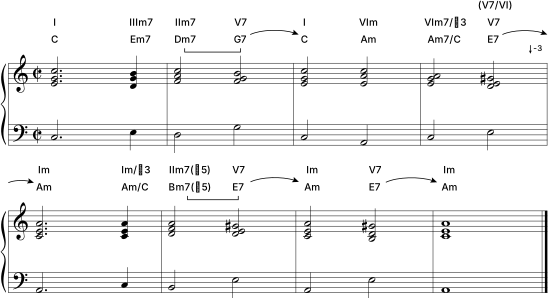
As you know, relative major and minor keys share a key signature. Identifying when a modulation has occurred will depend on a number of factors. The first factor in deciding whether a modulation has taken place is length and strength. A VI- chord preceded by a V7/VI and then moving back to the major key area is not a modulation because the V7/VI is a secondary dominant. With a secondary dominant, the music will quickly return to the major key as shown in Example 1.
Example 1. V7/VI Remaining in the Major Key:
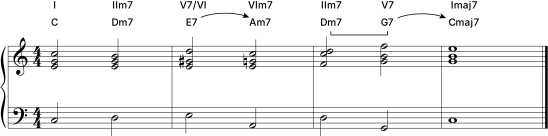
In Example 1 you can see and hear that the G
In Example 2 there is also an E7 chord. Hear and see that in this example G
Example 2. Clear Modulation from Major to Relative Minor:

Minor Key to Relative Major Modulation
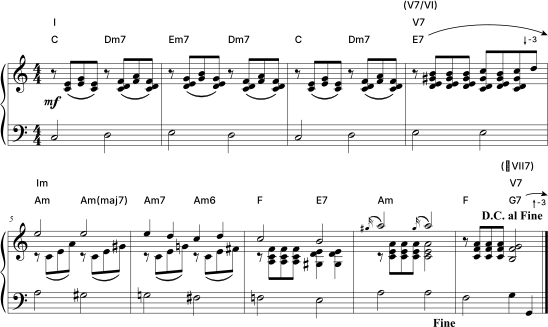
Modulations from a minor key moving to its relative major can also occur. Example 3 shows a modulation moving from major to relative minor followed by a return to relative major. The key of C major is established in the first three bars before the G
Example 3. Modulation to Relative Minor and Back:
"You’ve Got a Friend" Modulation
"You've Got a Friend," written by Carole King, and made famous by James Taylor, is a good example of a song that modulates from minor key to its relative major. The verses are in F
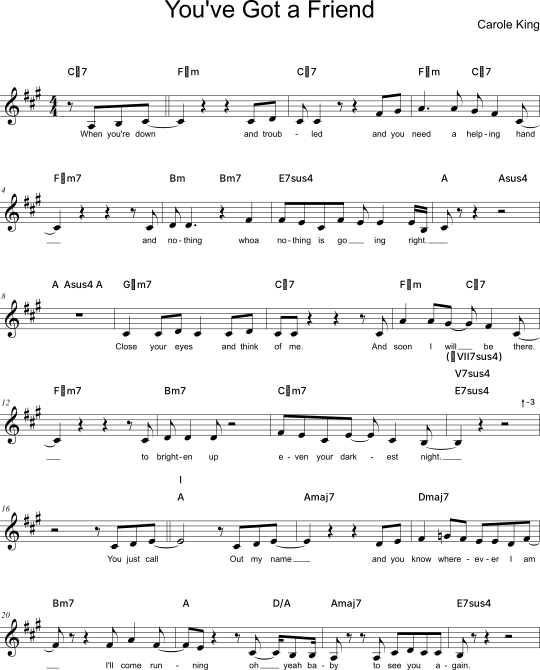
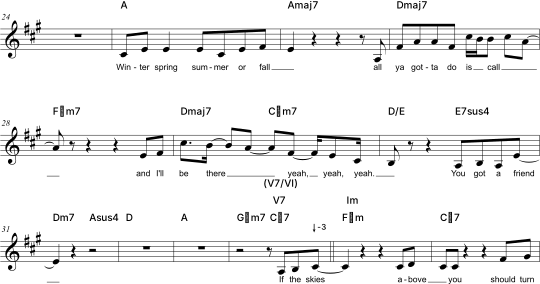
Modulating between relative minor and major is a smooth and common way to create interest and contrast in a song or composition. In songs and most classical compositions, if the music modulates to the relative minor from major, it is common for the music to return to the starting key. This is also true when modulating from minor to relative major. Remember that length and strength are the two components that make a clear modulation.
Workshop: Relative Major and Minor Modulation Practice
For this workshop you will:
Write a chord progression and melody that either modulates from minor to relative major or major to relative minor.
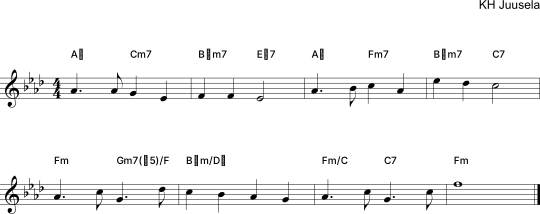
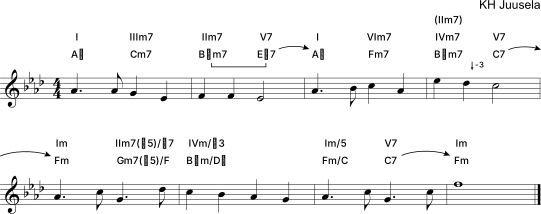
Analyze the following progression and melody using Roman numerals. Remember to use parenthetical analysis to show the function of the pivot chord in the initial key and to indicate the modulation with an upward or downward arrow showing the modulation interval.

Pivot Modulation Using Secondary Dominants
It helps to have a change of scenery from time to time because it brings new stimulation to our senses and that can positively affect creativity, art, and our relationship to the world around us. In fact, writer Haruki Murakami states in his book South of the Border, West of the Sun: A Novel, "A simple change of scenery can bring about powerful shifts in the flow of time and emotions."
If you think of modulation like changing scenery, where you go and how you get there becomes relevant. You could walk, ride a unicycle, take a train, or maybe even a spaceship. Or maybe you'll ride a Ferris wheel, hop a zip line, or grab a funicular.

And think of the places you could go! Perhaps you'll find yourself atop the Burj Khalifa or biking across France. Perhaps you'll find yourself on a gondola in Venice or sliding down the salt mines in Salzburg. Or perhaps you'll travel right in your own backyard and see it for the first time from a fresh perspective.
Change comes in many forms. It can be subtle or dramatic and all of the shades in between. One vehicle for creating a change of musical scenery through the shifting of tonality is secondary dominants, which we will be learning about in this topic.
“Everlasting Love" Analysis
As you know, secondary dominants are dominant 7th chords that have dominant function. In their natural setting they modify, or move to, their diatonic chord of resolution. These chords provide harmonic movement because of their instability, which is created by the tritone between the 3rd and 7th of the chord. Because of their harmonic drive, secondary dominants are perfect vehicles to take the listener to a new location.
Download the following PDF, which contains the chords to Cayson and Gaden's "Everlasting Love," which was a top 40 hit in the US four times in different decades and was recorded by four different artists. The recording you'll hear is by Carl Carlson.
Listen carefully to the harmonic function and cadence within each phrase. Although the bass and guitar are playing a "tonic pedal," meaning that they're playing Do of the key, try to sing along with the root motion of the chords. Also sing Do so you know where the tonal center is located. During the verse, Do will be easy to hear because of the tonic pedal. Notice if you hear the tonal center shift. After you've listened to the song, analyze the chords and include any appropriate graphics. When you are done analyzing, check your answers and then continue with the discussion about the song.
Download "Everlasting Love" Chords (PDF)
 |
(missing audio)
|
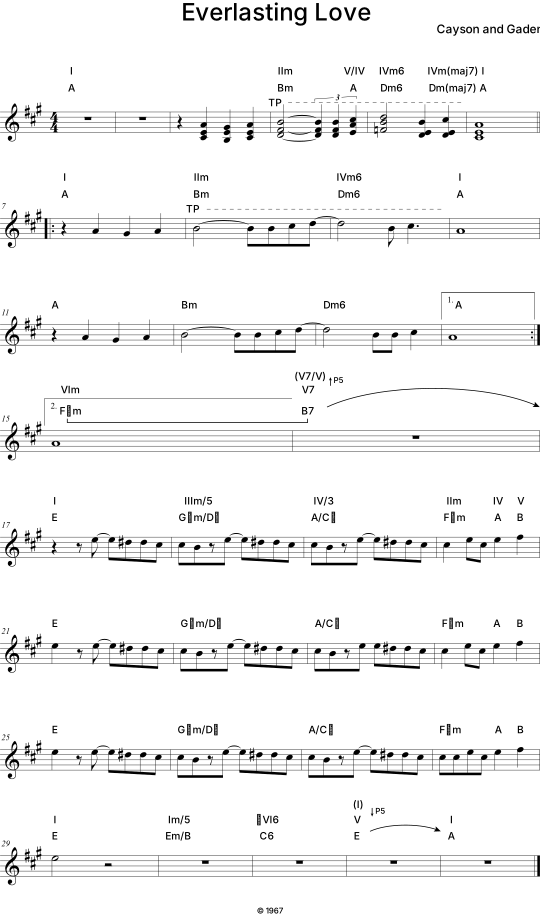
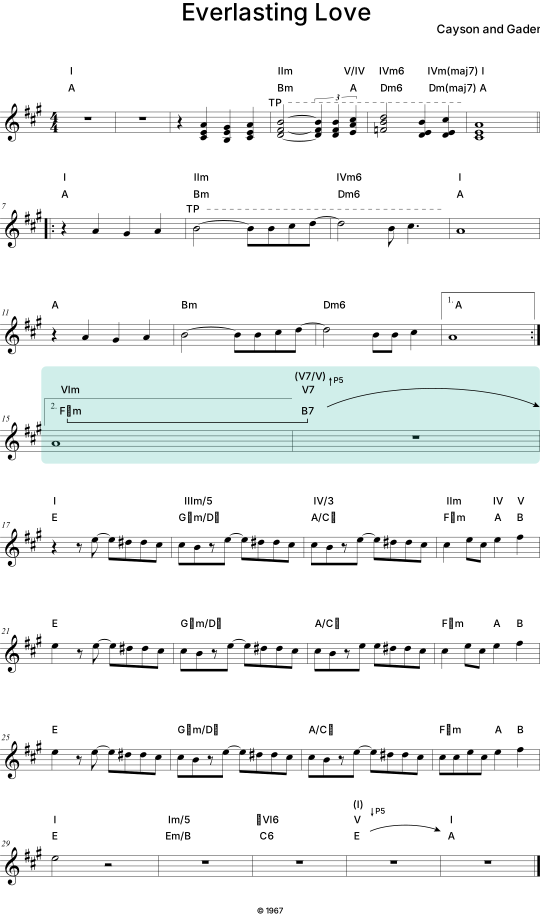
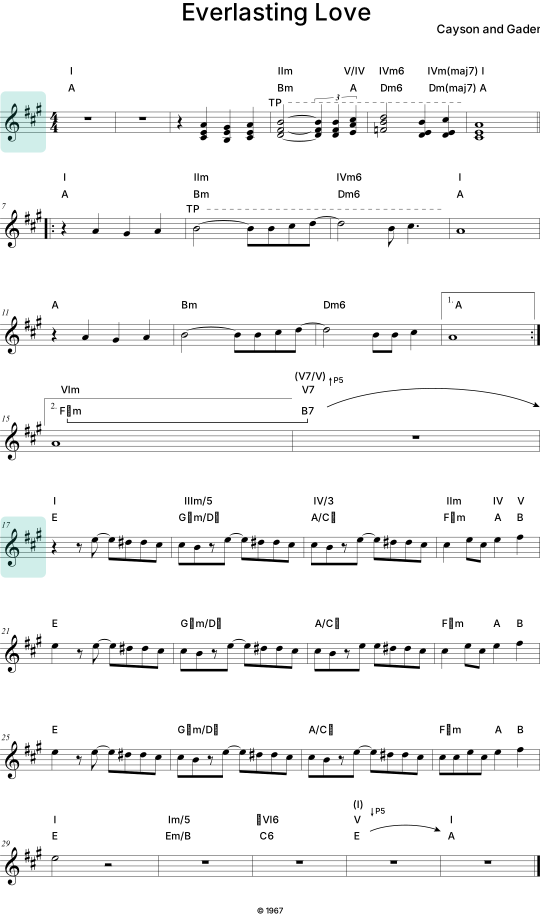
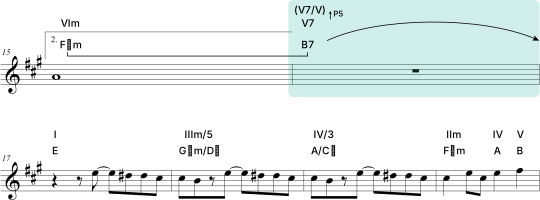
How did that go? Were you able to hear the shift in the tonal center?
“Kodachrome” Analysis
Let's look at one more song before we review all of the secondary dominants as pivot chords. Here is Paul Simon's "Kodachrome." Print out the PDF of the chords and follow the same process you completed for the previous song. When you are done, check your answers and then continue with the discussion about the song.
Download "Kodachrome" Chords (PDF)

Let's look a little more closely at this song. As you probably noticed, the primary key is E major and the secondary key is A major. Just like the song "Everlasting Love," "Kodachrome" modulates at the chorus. The verse is a simple and well-balanced diatonic chord progression with a melody that strongly outlines the key. The pickup to the first melodic phrase uses the chord tones of the I chord. The opening phrase focuses on the 5th and the 3rd of the key, which cadences back to the tonic. The key of E major is clearly stated. The final conclusion comes in measure 16, which is the only place where the tonic pitch sounds with the tonic chord.
"Kodachrome" Analysis:
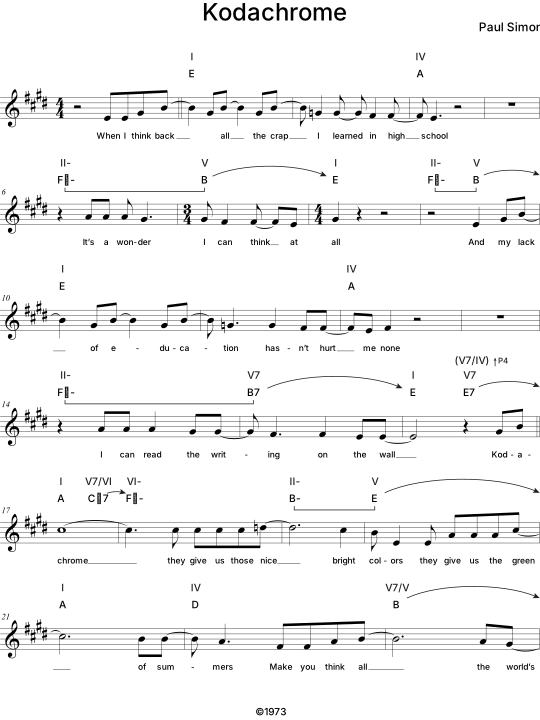
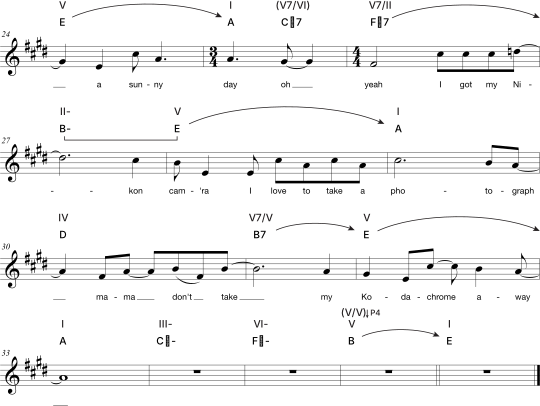
“Everlasting Love” and “Kodachrome” are good examples of the use of a secondary dominant to pivot to a closely related key. “Everlasting Love” employs the V7/V as a pivot chord to modulate to the key of the dominant, and in “Kodachrome,” the V7/IV serves as the pivot chord to the key of the subdominant.
Pivot Modulation and Modal Interchange
Music Theory and Composition 1 compared modal interchange to the moment Dorothy opens the door to her tornado-blown home and sees the colorful world of Oz for the first time. As you know, modal interchange is from another place, or another scale, borrowed from outside of the tonality in which it is used. It is an unexpected surprise, sometimes warm and sometimes sad, but in essence, it is a vivid place far away from home, that stands out amongst what is familiar. The image below shows the contrast of the vibrancy of Oz juxtaposed against the familiar sepia toned house from Kansas seen in the upper left corner.

While using a borrowed chord is like seeing this marvelous landscape for the first time, a pivot modulation based on modal interchange is like going to Oz, where you leave the familiar and visit the extraordinary for a time, eventually returning home.
“You’re Gonna Lose That Girl" Analysis
While there are many ways to modulate from one key to another, one way to create a shift in the tonal center is through the use of modal interchange chords that act as a diatonic chord in the new, or secondary, key. Let's look at the music of a few composers who decided to move away from the familiar and into the extraordinary using modal interchange chords.
The Beatles' "You're Gonna Lose That Girl," written primarily by John Lennon, starts with a very familiar harmonic phrase that strongly establishes the tonal center and incorporates a diatonic functional substitute, where VI- replaces the III- position in the second section.
As the song moves toward the bridge, the expectation is to hear V7 after the II- chord because it has been heard so many times at this point. Instead, the 
The end of the bridge ends on an F chord, which is
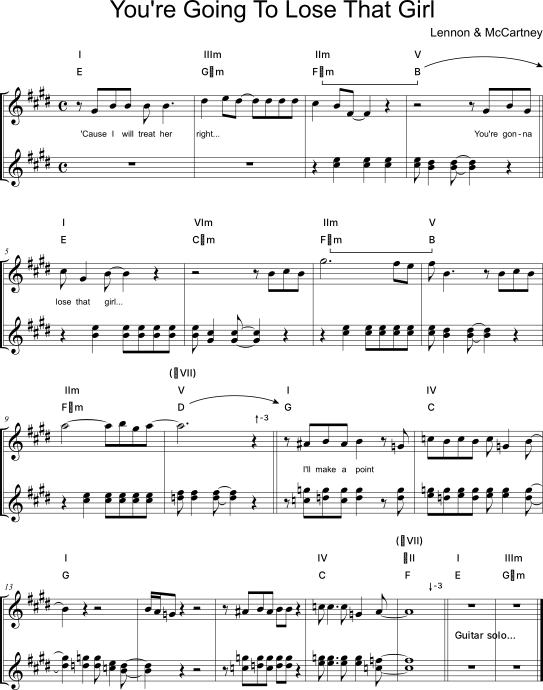
Beatles. "You're Gonna Lose That Girl," from Help!. (EMI/2013).
“Every Little Thing She Does Is Magic" Analysis
"You're Gonna Lose That Girl" is a good example of modulation between sections of a song and uses modal interchange to get in and out of the modulation. Here is another song that does the same. In this case, however, the pivot chord is
The melody and chords of the chorus very clearly outlines the key of D major. As it moves into the next section and new key, the new tonal center is ambiguous as the I chord is never played. The music floats through this new key and finally locks into the repeated chord pattern B
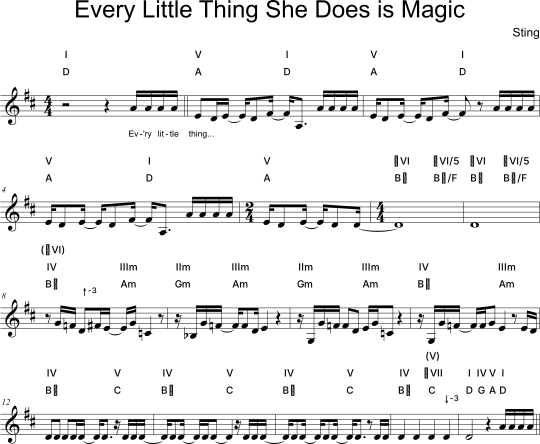
The Police. "Every Little Thing She Does Is Magic," from Ghost in the Machine (A&M Records Ltd./1981).
In both the Beatles song and the Police song, the pivot chord creates a certain expectation of progression based on its function in the original key. As we pivot, the chord reveals its logical functional relationship to the new key. It is as though we have stepped into a revolving door, expecting to arrive in one room and then unexpectedly enter another!
Modal interchange and secondary dominant chords, used as pivots, can open the door to unexpected tonal destinations. Modulation is a technique that will add color and contrast to your compositions. In the next topic we'll be exploring the aesthetic effects of moving directly from one key to another!
“Come in with the Rain” Analysis
Print out the following PDF and then listen to "Come In With The Rain" by Taylor Swift. The PDF matches the first 29 measures of the song, starting with the intro. Listen through a few times and then go back and analyze the sections on the PDF. Go back and listen again to confirm that your analysis reflects what you hear, then check your answers below.
Download "Come in with the Rain" Practice (PDF)
 |
(missing audio)
|

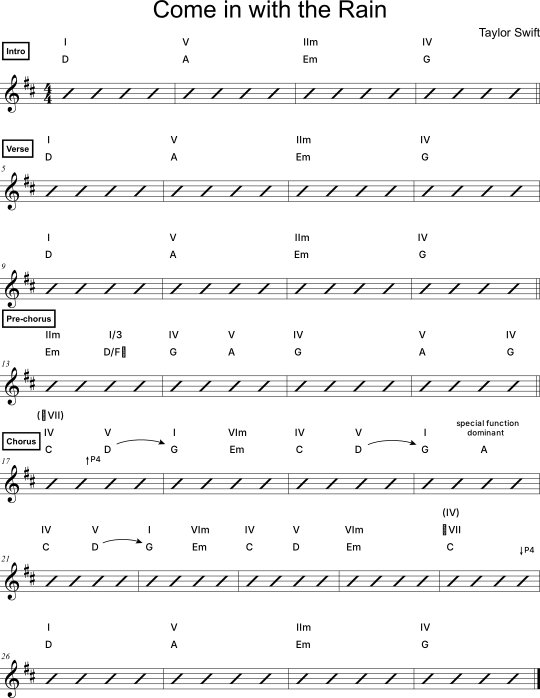
As you can see in the analyzed version of the song, the intro and verse are in the key of D, as is the prechorus. The opening chord on the chorus, C, plays the role of
The chorus contains the only cases of the primary dominant cadencing to I creating stability within the new key. At the end of the chorus, the chords are drawn out to a full measure value, which hints that something is about the change. The C chord sound like IV when moving from the E- chord, but when it cadences to D in the next measure, it sounds like
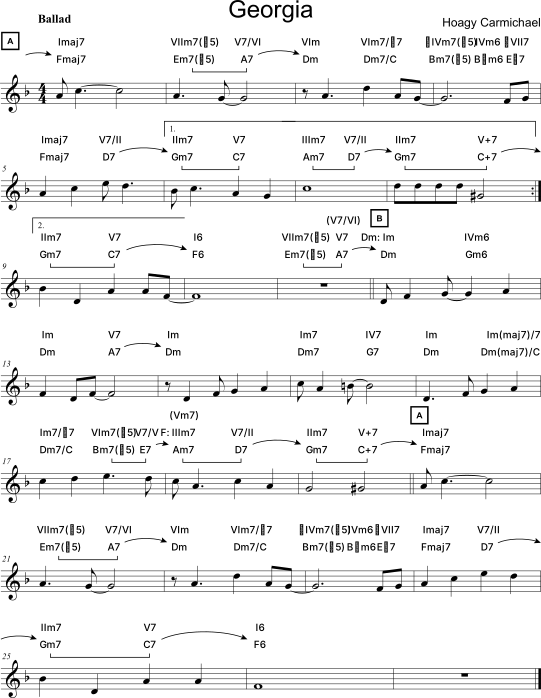
Workshop: "Georgia" Pivot Modulation Analysis
Download the attached PDF and follow the directions. Check your answers against the key provided.
Download "Georgia" Pivot Modulation Analysis (PDF)
Sunrise, Sunset: The Aesthetic Effects of Direct Modulation

Sunrise

Sunset
Modulation is a marvelous device for creating contrast within a composition. Eighteenth- and nineteenth-century European composers used changes of key as a principal device to articulate structure in their longer form compositions. Schubert, Schumann, Brahms, Faure, Wolf, and Debussy all used modulation to distantly related keys to create emotionally affecting changes of color within shorter song forms. This practice filtered into the compositional technique of American songwriters in the twentieth century on a more compressed scale within the confines of the short chorus. In turn, jazz composers have left their own imprint on the use of modulation.
So what is modulation? We say that a modulation has occurred when the listener senses the arrival of a new tonal center; the note we have thought of as Do changes. Common modulations often involve moving from a key to its relative or parallel minor. In this topic we'll discuss the expressive possibilities of moving directly from one major key to another major key.
Aesthetic Effects of Movement around the Circle of Fifths
Direct modulations create one of two basic aesthetic effects: a brightening or heightening of intensity, or a darkening or relaxation of intensity. The intensity with which these two musical effects register on the listener is dependent on the number of common tones from one key to another. Keys that have all tones in common but one are referred to as closely related. C major and G major differ by only one note: F–F♯. They are closely related keys. Those with more chromatic tones and fewer common tones are said to be distantly related. C major and E major are distantly related keys.
The circle of 5ths is a convenient tool for measuring these effects. We will use the key of C major as our point of reference and express the relationships as Roman numerals so that we can commute this understanding into other keys. Any key can be the parent key or initial reference point and so the numerical relationships are important for the sake of analysis.
Aesthetic Effect of Movement Around the Circle of 5ths:
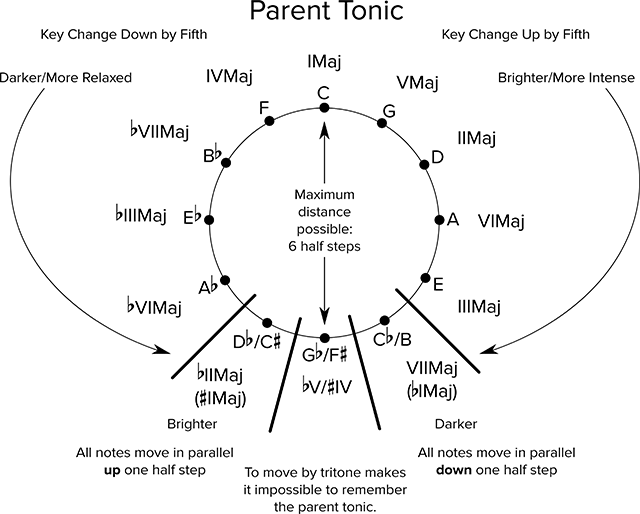
If we move around the circle by 5ths in a sharp direction (clockwise), lining up the pitches of the scales in parallel, we can observe that even though there are many common tones between keys, each of the principal tonal degrees—1, 4, and 5—is eventually raised by one half step. This creates a successive feeling of brightening, with III major the most extreme example. So, the move from C major to the closely related key of G major creates some brightening, but to move from C major to the distantly related key of E major will create a more exciting contrast.
Moving in a Sharp Direction:
I Major |
C: |
C D E F G A B |
|
V Major |
G: |
C D E F♯ G A B |
(4 is raised) |
II Major |
D: |
C♯ D E F♯ G A B |
(1 and 4 are raised) |
VI Major |
A: |
C♯ D E F♯ G♯ A B |
(1, 4, 5 are raised) |
III Major |
E: |
C♯ D♯ E F♯ G♯ A B |
(1, 2, 4, 5 are raised) |
If we move around the circle by 5ths in a flat direction (counterclockwise), the effect is one of relaxation or darkening. The principal tonal degrees—1, 4, and 5—are retained with each successive move, maintaining a strong connection with the parent or original key. The scale degrees—2, 3, 6, and 7—are lowered successively, creating a graduated darkening.
Moving in a Flat Direction:
I Major |
C: C D E F G A B |
IV Major |
F: C D E F G A B♭ |
♭VII Major |
B♭: C D E♭ F G A B♭ |
♭III Major |
E♭: C D E♭ F G A♭ B♭ |
♭VI Major |
A♭: C D♭ E♭ F G A♭ B♭ |
In the most distantly related keys, this phenomenon begins to break down. Moving directly from I major to
I Major to
I Major |
C: C D E F G A B |
♭II Major |
D♭: D♭ E♭ F G♭ A♭ B♭ C |
♯I Major |
C♯: C♯ D♯ E♯ F♯ G♯ A♯ B♯ |
Similarly, moving directly from I major to VII major crates a darkening, as all tones move down in parallel by one half step. Conversely, its effect is that of
I Major to VII or ♭I Major, VII Major Is Enharmonically Equivalent to ♭1 Major:
I Major |
C: C D E F G A B |
VII Major |
B: B C♯ D♯ E F♯ G♯ A♯ |
♭I Major |
C♭: C♭ D♭ E♭ F♭ G♭ A♭ B♭ |
Common Tone Modulation
Direct modulations between distantly related keys are often facilitated by a technique known as common tone modulation. A note, common to both keys, is used to link them for the sake of continuity. In Franz Schubert's song "Der Musensohn," the composer alternates sections of equivalent length in G major and B major. See the excerpt below for an example of a common tone modulation. You can see that the note B in the vocal part (the 3rd of G major and the root of B major) serves as the link between the two keys.
Common Tone Modulation in "Der Musensohn" by Schubert:
"Der Musehsohn" is also an excellent example of the brightening/darkening effect of direct modulation discussed above. The song is strophic, but rather than repeat the same music for each verse, Schubert creates an interesting five-part form: first verse in G, second verse in B, third verse in G, fourth verse in B, and final verse in G. Notice the increase in intensity each time the song modulates four 5ths in a sharp direction from G to B, and the relaxation that occurs when the same distance is covered in a flat direction—B major back to G major.
"All the Things You Are"—Common Tone Modulation
Jerome Kern's "All the Things You Are" employs a common tone modulation to move from the key of E major to A
Summary
Here's a summary of direct modulation:
Closely related keys differ by one note
Distantly related keys have fewer common tones
Modulating directly in a sharp direction (clockwise on the circle of 5ths) causes an increase in intensity or a brightening
Modulating directly in a flat direction (counter-clockwise on the circle of 5ths) causes a decrease in intensity or a darkening
Modulation to a distantly related key can be facilitated by a single tone common to both keys
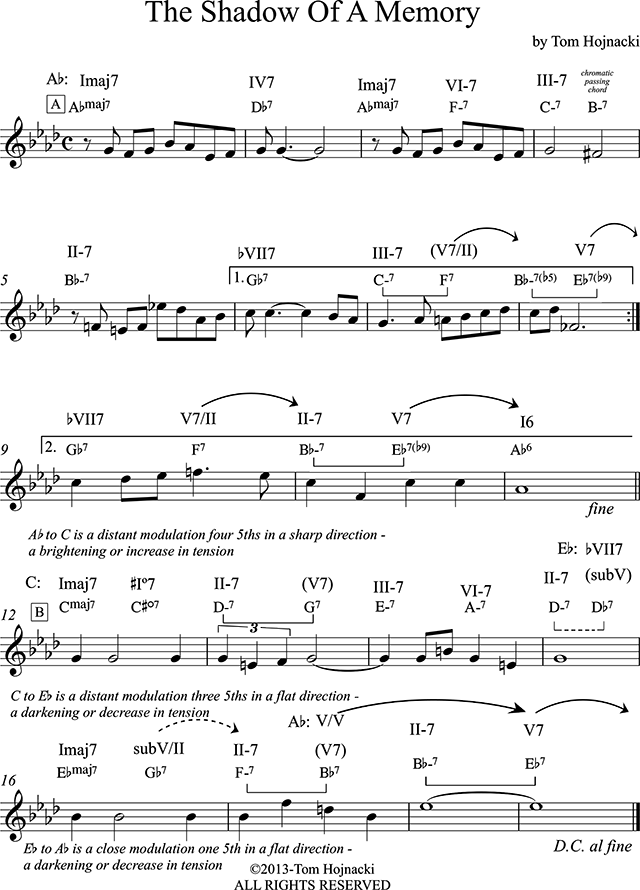
Workshop: “The Shadow of a Memory” Analysis
Download the lead sheet for "The Shadow of a Memory." Listen to the audio and do an analysis of the harmony. Can you hear the sharp-directed and flat-directed modulations? Check your answers against the answer key.
Download "The Shadow of a Memory" (PDF)
Walking on Air: The Transitional Modulation

Walking on Air on a Footbridge
Modulating from one tonality to another can be instantaneous—a direct modulation. In a pivot modulation there can be a moment of disorientation as one's expectation is rerouted to arrive in an unexpected key. Or, there can also be a period of time in which the listener consciously perceives that they are traveling between two different keys. This is called a transitional modulation. As we have learned previously, an extended dominant or substitute extended dominant series can create moments within a phrase in which there is no clear reference to the parent tonality or the eventual new tonality. During these moments the listener is carried along by a strong progressive pattern that creates a sense of motion or transition toward a new goal key. A transitional modulation acts as a bridge between two keys.
Transitional Modulation of “Lithe and Lovely”
To begin, let's listen to the transitional modulation of Tom Hojnacki's "Lithe and Lovely." This piece is a mid-tempo jazz tune in AABA form.
Joe Mulholland & Tom Hojnacki. "Lithe And Lovely" from Berklee Book of Jazz Harmony (2013)
The A section is in the key of F. The B section modulates directly to the key of D
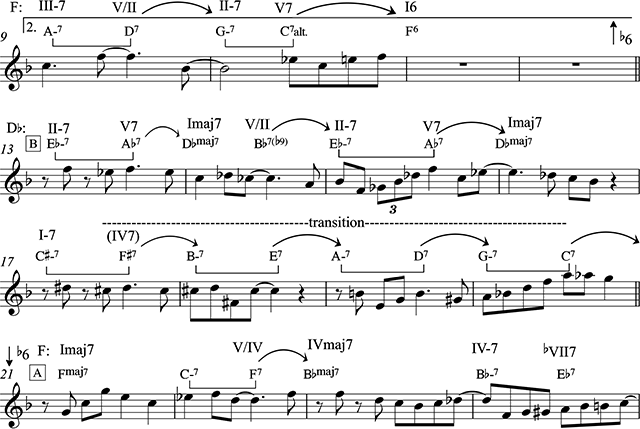
In m. 17, it is possible to hear the first two chords in relation to the key of D
Notice also that the target notes in the melody in each of the measures of the transition passage are T9 and T13.
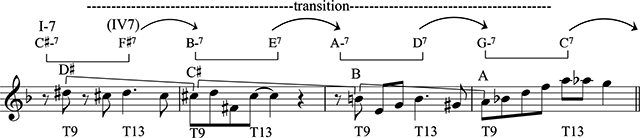
This creates a clear descending melodic progression (D
Transitional Modulation Use for Key Changes
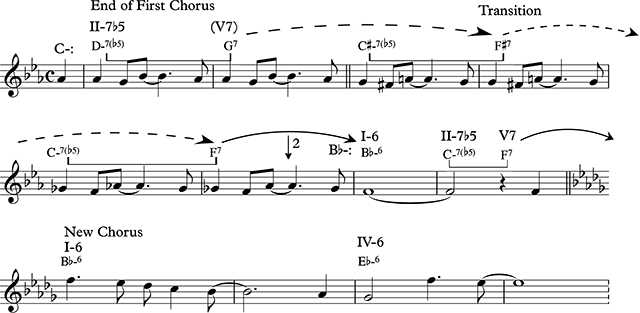
Transitional passages can also be used to facilitate a key change in an arrangement. Suppose that you are writing an arrangement and you want to change the key of a melody that has already been heard several times, for contrast and variety. First, plan an extended dominant or extended substitute dominant series that will progress smoothly from one key to the other. Then, find a prominent motive in the melody and use it to create a sequence. Voila! You have a transitional passage!
Say that we are writing an arrangement of Harold Arlen's classic "Over the Rainbow," and we want to change the key from one chorus to the next. We have started in G and we want to set the second chorus in the key of E
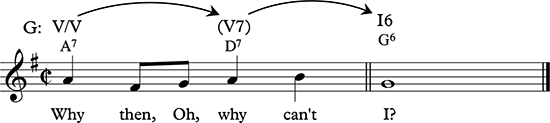
The harmony is V/V-V7-I6, which can easily be developed into an extended dominant series by turning the G6 into G7:
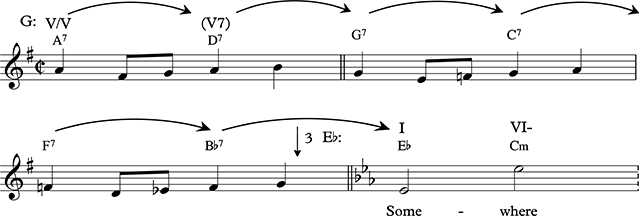
The melody for the lyric "Why then, oh why . . . " is a strong recognizable motive that can be transposed sequentially. The harmonic and melodic development creates a transitional bridge from the key of G to the new key of E
Foot Bridge
If one side of the gorge is the key of G major and the other side is the key of E
Workshop: Transitional Modulation
Try your hand at writing a transitional modulation. Download the PDF and follow the directions. Check your answer against the answer key.
Download Blue Bossa Transitional Modulation (PDF)
A Fork in the Road: The Many Paths to Extended Phrase Endings

Accomplished storytellers know that nothing is more thrilling for an audience than an unexpected twist or turn to the plot just before the final ending. Think of a movie in which the hero turned into the villain at the last moment. Or, just when all seemed lost, the hero arrived to save the day. Unexpected plot twists are pure gold for writers. The same is true for composers of music. The strong expectation for resolution created by a final cadence can be disrupted to enormously satisfying results. The following progressions are the province of jazz musicians primarily and are often employed as phrase extensions at the ends of tunes to create a final extended ending or coda. In addition to extending a phrase or section of a composition, these deceptive resolutions and subsequent progressions can be used to create interludes in arrangements, or to facilitate modulation to distantly related keys. In short, they are very useful tricks of the trade!
Final Cadence and Extended Endings
The jazz half cadence in the first measure of each phrase creates a strong expectation of resolution to the Imaj7 chord. This expectation is disappointed by the appearance of an unexpected chord on the strong stress of the downbeat of the next measure. Because each of the moves is tonally logical, they have come to be regarded as standard deceptive resolutions that will extend what seems like an obviously closed-ended phrase.
The traditional deceptive cadence:
The move to VI– is logical because its third is the tonic note of the key and VI– is a tonic function chord. The deceptive resolution is generally followed by a dominant cadence of some sort to bring the piece to a close. When used mid-phrase, the progression can continue in any fashion.
The extended turn-around ending:
The move to III-7 is logical because it is a member of the tonic function family. The cycle 5 progression (III-7, V-7/II, II7, V7) may be repeated multiple times before a final cadence to Imaj7. III-7 can be treated diatonically or as a related II by adding a non-diatonic T9 for a bright lift. III-7
Often heard as an ending for slow ballads:
The move to
The following example is another popular ballad ending:
The move to
The next example is a wonderful deceptive resolution:
It is tonally logical because the 3 and 7 of
The following moves unexpectedly but logically to the tonic minor modal interchange chord
The subsequent cycle 5 root motion of
The next example is unusual:
The move from V7 to
Standard Deceptive Resolution Summary
Learn each of the phrases shown and use each to extend the ending of a familiar tune, preferably one you have composed yourself. Create harmonic variations on each of the progressions using the suggestions given above. Once you are familiar with these phrases you can begin to use them for other purposes, such as creating a change of key or creating a subtle detour in a standard chord progression. Have fun!
Standard Deceptive Resolution Summary
After a final dominant cadence, the following chords may introduce an extended phrase ending:
VI-7
III-7
Workshop: Extended Endings Practice
Write out the chord changes for each of the eight phrases in this topic. Transpose each phrase into the following keys: G, F, B
Phrase 1:
Phrase 2:
Phrase 3:
Phrase 4:
Phrase 5:
Phrase 6:
Phrase 7:
Phrase 8:
Answer Sheets:
Download Answer Key in G (PDF)
Download Answer Key in F (PDF)
Composers on Composing: Form Influence on a Composition
This week, in lesson 8, three more composers shared their thoughts on last week's composer question.
The question was: How does form influence your composition?
Composers interviewed in week 8:
Mark Simos—Songwriter/performer
Elena Roussanova—Contemporary classical music composer and performer
Omar Thomas—Jazz composer
Recap
In this lesson you have learned:
the aesthetic effect of close and distantly related modulations
the relative effects of sharp and flat directed modulations
the concept of common tone modulation
to recognize and employ different kinds of common chord and pivot chord modulations
to recognize and employ the concept of the transitional modulation
to recognize and employ the standard deceptive moves following a V7 chord
more ways that professional composers use form in their compositions
In lesson 9, we will be exploring world music concepts of South America and the Caribbean.